Ngorongoro Conservation Area
The Ngorongoro Conservation Area spans from Serengeti National Park in the north, to the Great Rift Valley in the east.

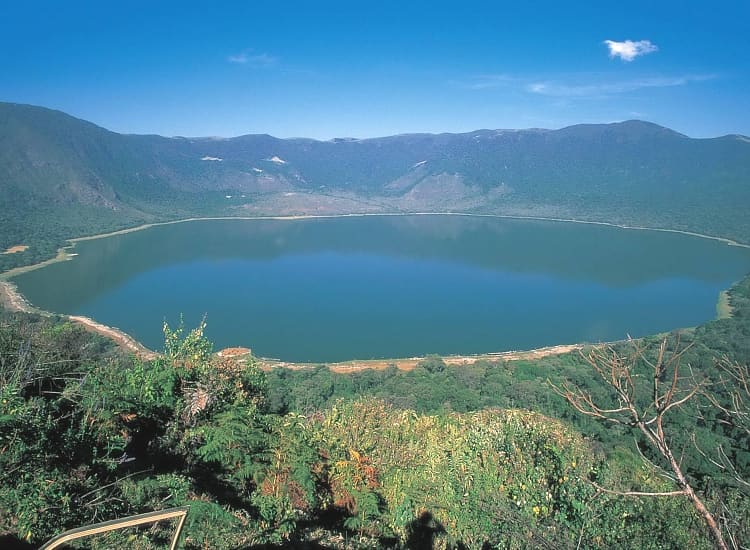
The Ngorongoro Conservation Area spans from Serengeti National Park in the north, to the Great Rift Valley in the east. In total, the conservation area covers more than 8,000 km² (3,200 sq. miles). It consists of the Ngorongoro Crater, Ndutu, Olduvai Gorge, Empakaai, Olmoti Crater and Oldonyo Lengai Mountain. The mix of forests, valleys, savannah, craters, lakes and swamps is home for a wide range of animals.
As one of Africa's Seven Natural Wonders, NCA was universally recognized as a UNESCO World Heritage in 1979 under the natural and cultural criteria owing to its global importance for biodiversity conservation having demonstrated by the existence of globally threatened species, the density of wildlife inhabiting the area, and the annual migration of wildebeest, zebras, gazelles, and other wild animals into the northern plains. Its cultural recognition stemming from an exceptionally long sequence of crucial evidence related to human evolution and human-environment dynamics. Due to its exceptionally long sequence of this crucial evidence, spanning nearly four million years to the beginning of this era, including physical evidence of the most important benchmark in human evolutionary development, NCA’s global identity is fairly justified.
At its inception, the Ngorongoro Conservation Area was primarily established as a multi-land use area, where wildlife could co-exist with the most dominant semi-nomadic Maasai residents, who always move from one place to another in search of water and pasture for their livestock.
The Ngorongoro Conservation Area is known to be a permanent homeland to multiple well-known ethnic groups who share distinctive customs and lifestyles, including the Hadza or Hadzabe and Datoga, Irawq. The Maasai people, however, are the most prominent ethnic group, who are thought to have migrated southeast from the Nile region in the 18th century.