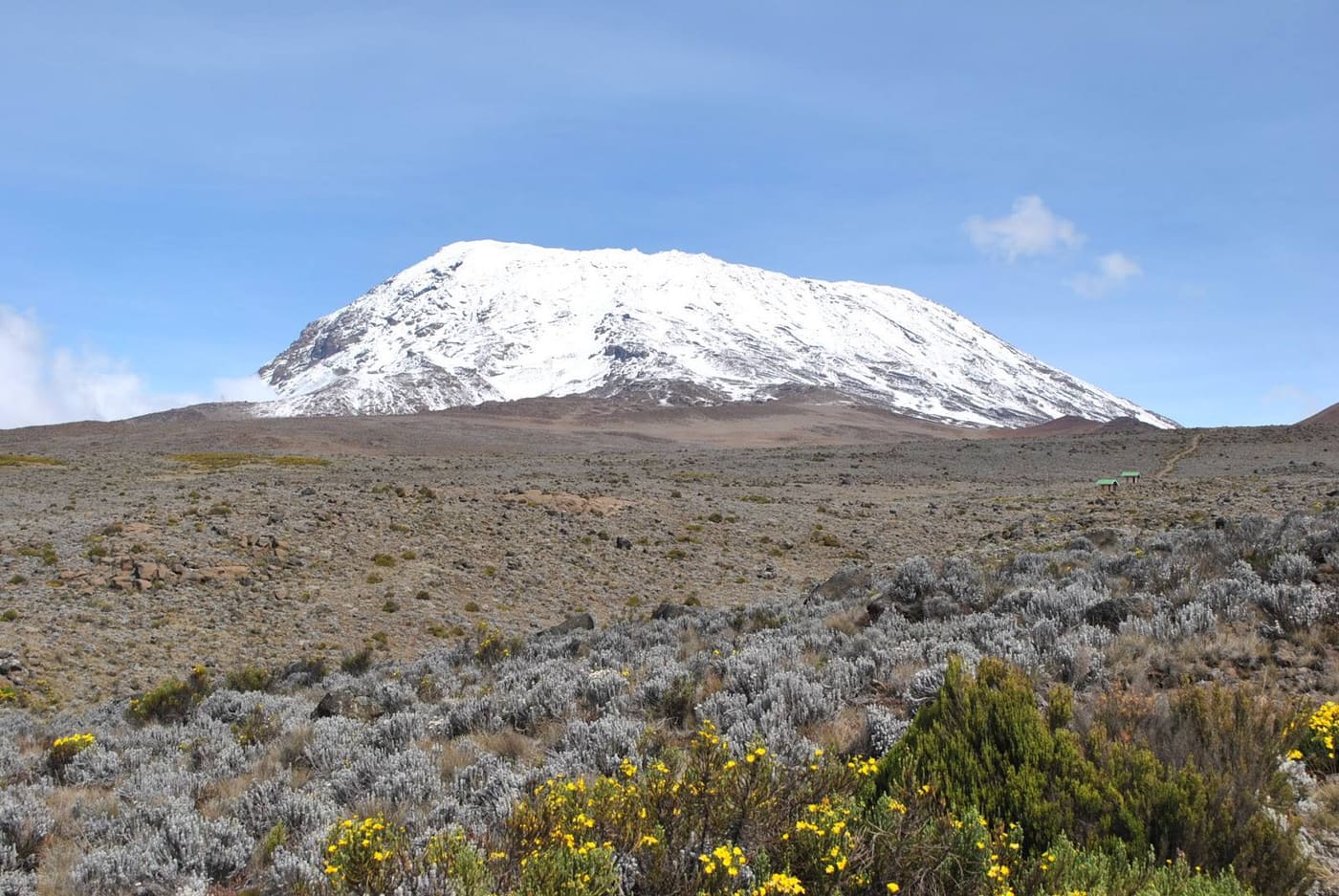
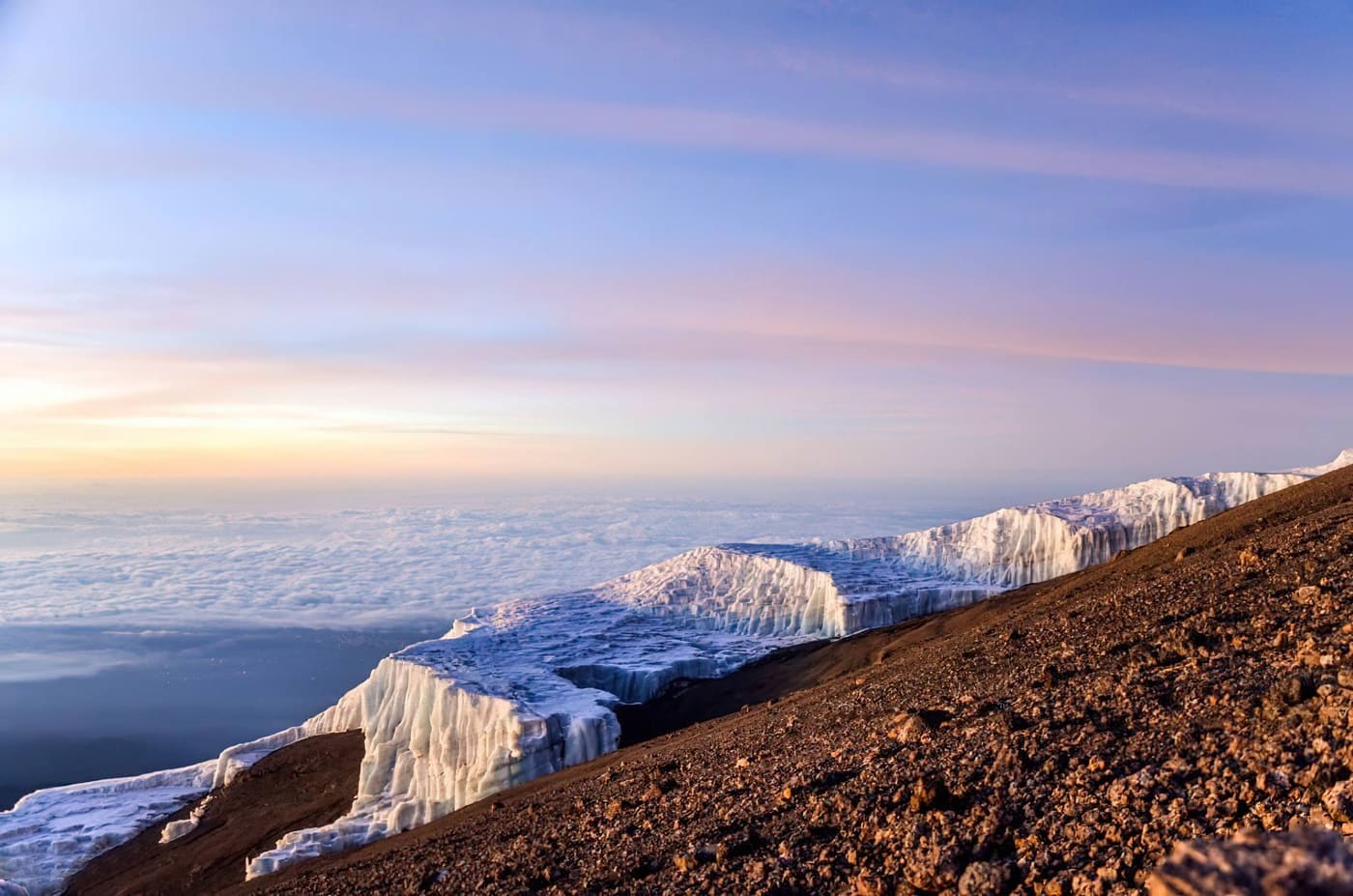
 Most popular – 5,895m
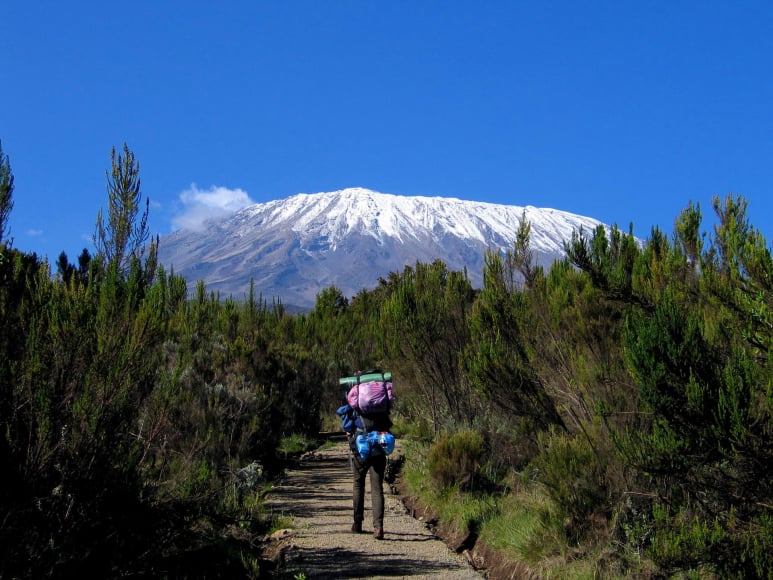
Route Overview
The Rongai Route
Kilimanjaro's quietest path to the summit – a six-day crossing that begins on the wild northern slopes near the Kenyan border, skirts the jagged spires of Mawenzi, and descends through the rainforest of the Marangu side to Uhuru Peak.
Moderate
6 Days
~80% Summit Rate
5 Nights Camping
The Kilimanjaro Rongai Route is the only path that approaches the mountain from the north, starting near the village of Nale Moru close to the Kenyan border. It is by far the least-travelled route on Kilimanjaro, with a gentler, more gradual gradient than Machame or Lemosho – making it a popular choice for trekkers who want a quieter, more remote experience, or who are climbing during the wetter months, since the northern slopes sit in the mountain's rain shadow.
The trail climbs through pine forest and open moorland before reaching Mawenzi Tarn, a small alpine lake cradled beneath the dramatic, jagged cliffs of Mawenzi Peak – widely regarded as the most scenic campsite on the mountain. From there the route crosses "The Saddle", a vast lunar-like high desert, to Kibo Hut for the final approach. Unlike Machame and Lemosho, Rongai is a true crossing of the mountain: you ascend from the north and descend via Horombo on the Marangu side, finishing through lush rainforest rather than retracing your steps.
All camping equipment, meals, crew wages, and park fees are included. Our guides carry emergency oxygen, a pulse oximeter, and wilderness first-aid certification. Group size is capped at six climbers per guide to ensure personal attention throughout the climb.
D1
Nale Moru (Rongai Gate) → First Cave Camp
1,996m ? 2,600m – ~3 hrs hiking
The drive from Moshi or Arusha to the village of Nale Moru, on the northern side of the mountain near the Tanzania–Kenya border, takes roughly 3–4 hours through farmland and pine plantations. After registration at the Rongai Gate, the trail climbs gently through pine forest and patches of natural woodland – a gentle introduction to the climb compared to the steeper southern routes. Camp is reached at "First Cave", a rocky overhang in the moorland zone, with open views north toward the Kenyan plains.
Northern Approach
Pine Forest
Kenyan Border Views
D2
First Cave Camp ? Kikelewa Cave Camp
2,600m ? 3,600m – ~6–7 hrs hiking
The trail leaves the last of the trees behind and climbs through open moorland – heather, proteas, and increasingly large stands of giant lobelia line the path. As the route arcs around the eastern flank of Mawenzi, the views open out across the Kenyan plains and, on clear days, toward Amboseli. Camp is set at Kikelewa Caves, a sheltered valley below Mawenzi's jagged volcanic spires, which glow dramatically at sunset.
Moorland
Mawenzi Views
Kikelewa Valley
D3
Kikelewa Cave Camp ? Mawenzi Tarn Camp
3,600m ? 4,330m – ~3–4 hrs hiking
A short but steep morning climb up grassy ridges leads to Mawenzi Tarn – a small alpine lake set in a natural amphitheatre beneath the sheer, jagged cliffs of Mawenzi Peak, and widely considered the most spectacular campsite on the mountain. The early arrival leaves the afternoon free for rest and acclimatisation, with an optional short walk toward Mawenzi's lower slopes for those wanting extra altitude exposure before the days ahead.
Mawenzi Tarn 4,330m
Alpine Lake
Acclimatisation Day
OPT
Optional Day (7-Day Trek): Mawenzi Tarn Rest Day
4,330m – Full rest day
For those opting for the extended 7-day variation, an additional rest day at Mawenzi Tarn allows further acclimatisation before the crossing to Kibo Hut. The day can be spent resting at camp or taking a short acclimatisation walk onto the lower ridges of Mawenzi, with extra time to prepare gear and mentally reset before summit night. This extension meaningfully improves summit success rates and is recommended for first-time high-altitude trekkers.
Optional Upgrade
7-Day Version
D4
Mawenzi Tarn Camp ? Kibo Hut
4,330m ? 4,700m – ~5–6 hrs hiking
The route crosses "The Saddle" – a vast, stark, high-altitude desert stretching between Mawenzi and Kibo, with almost no vegetation and little shelter from the wind. The going is gentle but exposed, and the scale of the landscape gives a real sense of remoteness. Kibo Hut, a stone shelter at the base of the final summit slopes, is reached by mid-afternoon. An early dinner is served and climbers try to rest before the midnight departure – though many find sleep difficult given the altitude and anticipation.
The Saddle
Lunar Desert
High Camp 4,700m
D5
Summit Night ? Uhuru Peak ? Horombo Hut
4,700m ? 5,895m ? 3,720m – ~14–15 hrs total
Departure begins around midnight, climbing steep scree past Hans Meyer Cave toward the crater rim. This is the most physically and mentally demanding section of the entire trek. Gillman's Point (5,685m) is reached around dawn – many climbers catch the sunrise here, with Mawenzi's spires silhouetted against the glow to the east. From Gillman's Point the trail follows the crater rim past the glaciers to Uhuru Peak at 5,895m: the highest point in Africa. After summit photographs, you descend back to Kibo Hut for a short rest and late breakfast, then continue down through moorland to Horombo Hut for the night.
Gillman's Point 5,685m
Uhuru Peak 5,895m
Summit Night
Sunrise on the Crater
D6
Horombo Hut ? Marangu Gate ? Moshi
3,720m ? 1,860m – ~5–6 hrs descent
The final day descends through the moorland zone and into the lush, dripping rainforest of the Marangu side, passing Mandara Hut along the way. At Marangu Gate, summit certificates are presented to all those who reached Gillman's Point or above. A vehicle meets you at the gate for the short transfer back to your hotel in Moshi – much shorter than the drive back from the western or southern routes. Don't forget to tip your guides and porters. Tonight: a well-earned celebration dinner.
Rainforest Descent
Summit Certificates
Transfer to Hotel
Travel Information
Getting to Kilimanjaro
This tour starts on the northern side of the mountain near the Kenyan border and ends on the southern side, in the Kilimanjaro region. Our team handles all ground logistics from the moment you arrive at the airport.
1
This tour ends in the Kilimanjaro region, with the nearest international airport being Kilimanjaro International Airport (JRO), located approximately 40 km from Moshi and 50 km from Arusha. Most international flights transit through Dar es Salaam (DAR), Nairobi (NBO), or Addis Ababa (ADD).
2
Fly to or from Kilimanjaro Airport (JRO). Direct flights from Europe are available on KLM (Amsterdam) and Condor (Frankfurt). Check current prices and availability at your preferred flight booking platform.
3
Airport transfers to your hotel, and the morning transfer to the Rongai trailhead at Nale Moru on the northern side of the mountain (around 3–4 hours from Moshi or Arusha), are arranged by Wild Gaze Safaris. Please advise your flight details at least 48 hours in advance. Transfer pricing is available on request.
4
Additional accommodation before or after the climb – in Moshi or Arusha – can be arranged at a range of price points. We work with trusted guesthouses and boutique lodges suited to trekkers arriving early or departing late.
What's Covered
Package Inclusions
Kilimanjaro National Park entrance and camping fees
Kilimanjaro Rescue Fee (mandatory government levy)
All meals during the trek (breakfast, lunch, dinner, snacks)
Purified drinking water and hot beverages throughout
Professional lead guide (10+ years Kilimanjaro experience)
All assistant guides, chefs, and porters (wages included)
High-quality four-season mountain tents
Sleeping bags and insulated sleeping mats (included on request)
Emergency oxygen and pulse oximeter carried by lead guide
All road transport between Moshi/Arusha, Rongai Gate, and Marangu Gate
Summit certificate (for those reaching Gillman's Point or above)
All government taxes and VAT – no hidden charges