 2 Parks – Compact northern classic
Full Northern Circuit
6 Days Safari – Manyara, Ngorongoro, Serengeti & Tarangire
The complete northern Tanzania experience – all four flagship parks in one sweeping expedition, from flamingo-fringed lakeshore and ancient crater to the endless Serengeti plains and Tarangire's great elephant herds.
All Big Five
6 Days / 5 Nights
Camping Safari
1 – 12 Persons
This six-day safari represents the most comprehensive northern circuit itinerary we offer – a single, seamlessly organised expedition through all four of Tanzania's iconic northern parks. No compromises, no parks skipped. You begin at Lake Manyara for its extraordinary diversity in a compact space: tree-climbing lions, vast groundwater forest elephants, flocks of flamingos on the alkaline shallows, and remarkable birdlife along the Rift Valley escarpment. From there the route climbs to the Ngorongoro Crater for a full-day descent into this self-contained wildlife world – a UNESCO World Heritage Site and arguably the most productive single game-drive location on the continent.
The heart of the safari is the Serengeti, where two dedicated game-drive days allow you to fully explore the ecosystem rather than rushing through it. Your guide uses local knowledge and radio networks to track predator activity, migration columns, and seasonal wildlife concentrations across the Seronera Valley and surrounding plains. Depending on the time of year you may witness the Great Wildebeest Migration – 1.5 million animals moving in a continuous cycle – or the equally spectacular dry-season concentrations of predators and prey along the permanent river systems.
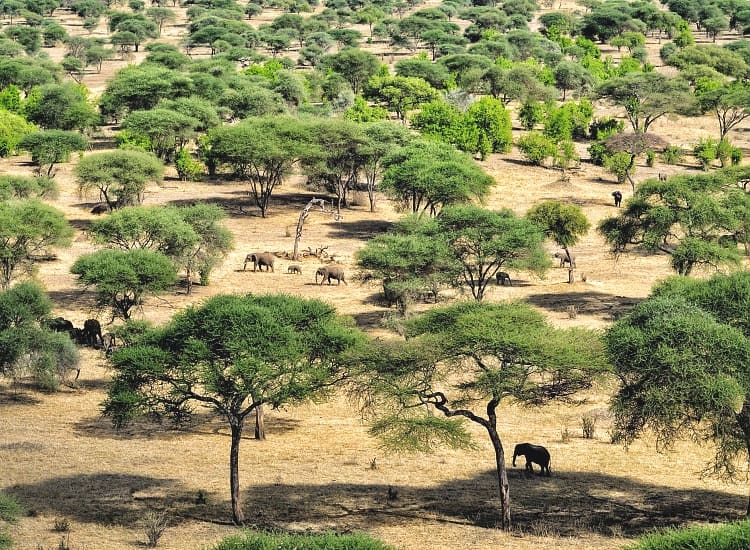
The journey concludes at Tarangire National Park, an often underestimated destination that provides a brilliant contrast to the open Serengeti: ancient baobab trees dot a landscape of dense bush through which enormous elephant herds – sometimes numbering in the hundreds – move between the Tarangire River and the surrounding seasonal swamps. It is the finest elephant-viewing destination in northern Tanzania, and a worthy final chapter to the circuit. All camping equipment, meals, park fees, and professional guide services are fully included.
D1
Arusha ? Lake Manyara National Park
Depart Arusha ~9:00am – ~2 hrs drive – Afternoon game drive
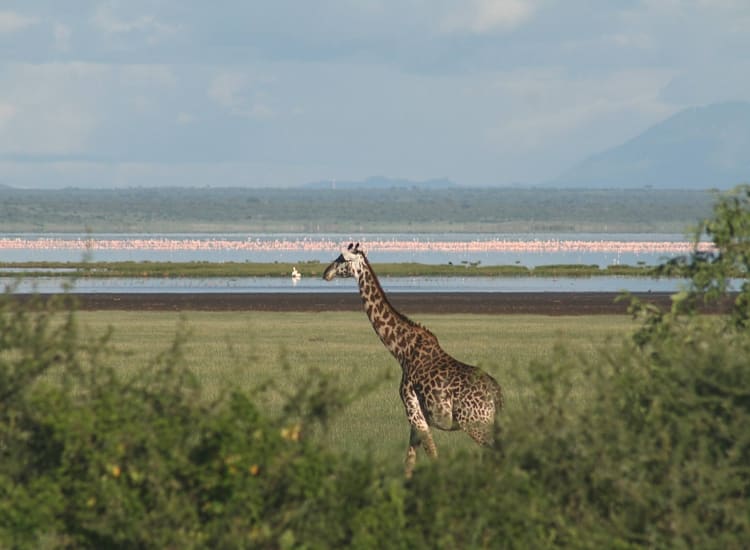
Depart your Arusha hotel after an early briefing and travel west along the base of the Great Rift Valley escarpment to Lake Manyara National Park – one of Tanzania's most rewarding half-day parks and an outstanding opener for the full northern circuit. The park entrance drops immediately into a cool, cathedral-like groundwater forest where blue monkeys and olive baboons forage noisily overhead. Emerging from the forest onto the open floodplain, the park reveals its signature spectacle: tree-climbing lions draped over the branches of large yellow fever acacias, a behaviour unique to the Manyara and Queen Elizabeth populations. Large elephant herds move between forest shade and the lakeshore, while the alkaline waters themselves are edged with vast pink-and-white flamingo colonies. A rich diversity of waterbirds – saddle-billed storks, yellow-billed pelicans, African spoonbills – complete one of the most species-dense afternoon drives in East Africa. Return to camp near the crater rim for dinner and overnight.
Groundwater Forest
Tree-Climbing Lions
Flamingo Flocks
Elephant Herds
Camp Dinner & Overnight
D2
Ngorongoro Crater – Full Day Descent
Early descent at dawn – Full day on crater floor – Ascent by 4pm – Simba Camp overnight
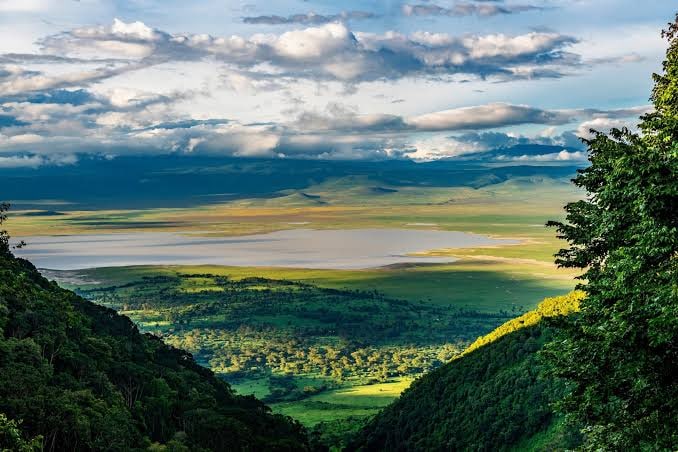
Rise before first light for a pre-dawn drive to the crater rim, arriving in time to watch the sun rise over the 600-metre caldera walls and the mist lifting from the crater floor 260 square kilometres below. The descent road winds steeply through highland forest – look for elephant, buffalo, and spotted hyena on the forest fringes even before reaching the bottom. The Ngorongoro Crater floor contains one of Africa's densest wildlife populations: an estimated 25,000 large animals in a self-contained ecosystem from which most cannot leave. This is the single best location in Tanzania to see the critically endangered black rhino, with a small but stable resident population. The crater's four distinct lion prides are famous for their enormous black-maned males – among the most impressive lion specimens in Africa. Spotted hyena clans, leopards in the acacia woodland margins, and vast herds of wildebeest, zebra, and eland fill the rest of the day. A picnic lunch beside the soda lake, watched by Egyptian geese and crowned cranes, is one of the safari's most memorable moments. Ascend to Simba Camp on the crater rim by late afternoon. Overnight at 2,400 metres under an extraordinary sky.
Black Rhino
Black-Maned Lions
Spotted Hyena
Soda Lake Picnic
Crater Rim Overnight
D3
Ngorongoro ? Serengeti National Park via Olduvai Gorge
Depart after breakfast – Olduvai Gorge stop – Game drive from Naabi Hill Gate
After breakfast at the crater rim, the drive west follows the rim road through montane forest before descending onto the short-grass plains of the Ngorongoro Conservation Area – a landscape shared by Maasai herders and free-roaming wildebeest in equal numbers. A stop at Olduvai Gorge provides a remarkable interlude: this UNESCO site in the eastern Serengeti plains is where Dr Louis and Mary Leakey uncovered fossil evidence of some of humanity's earliest ancestors, including Homo habilis and Australopithecus boisei. The gorge's small but excellent museum sets the ancient landscape you are travelling through in extraordinary perspective. The road then levels into the open Serengeti ecosystem, entering the park proper at Naabi Hill Gate – from the top of the kopje here, the plains truly seem to stretch to the edge of the world. An afternoon game drive through the central Serengeti brings your first encounters with the park's resident lion prides, cheetah on the open plains, and the seasonal aggregations of the migration. Arrive at Seronera camp for dinner and overnight.
Olduvai Gorge
Maasai Conservation Area
Naabi Hill Gate
Afternoon Game Drive
Seronera Overnight
D4
Full Day – Central Serengeti Game Drives
Dawn drive – Bush picnic – Afternoon drive – Seronera overnight
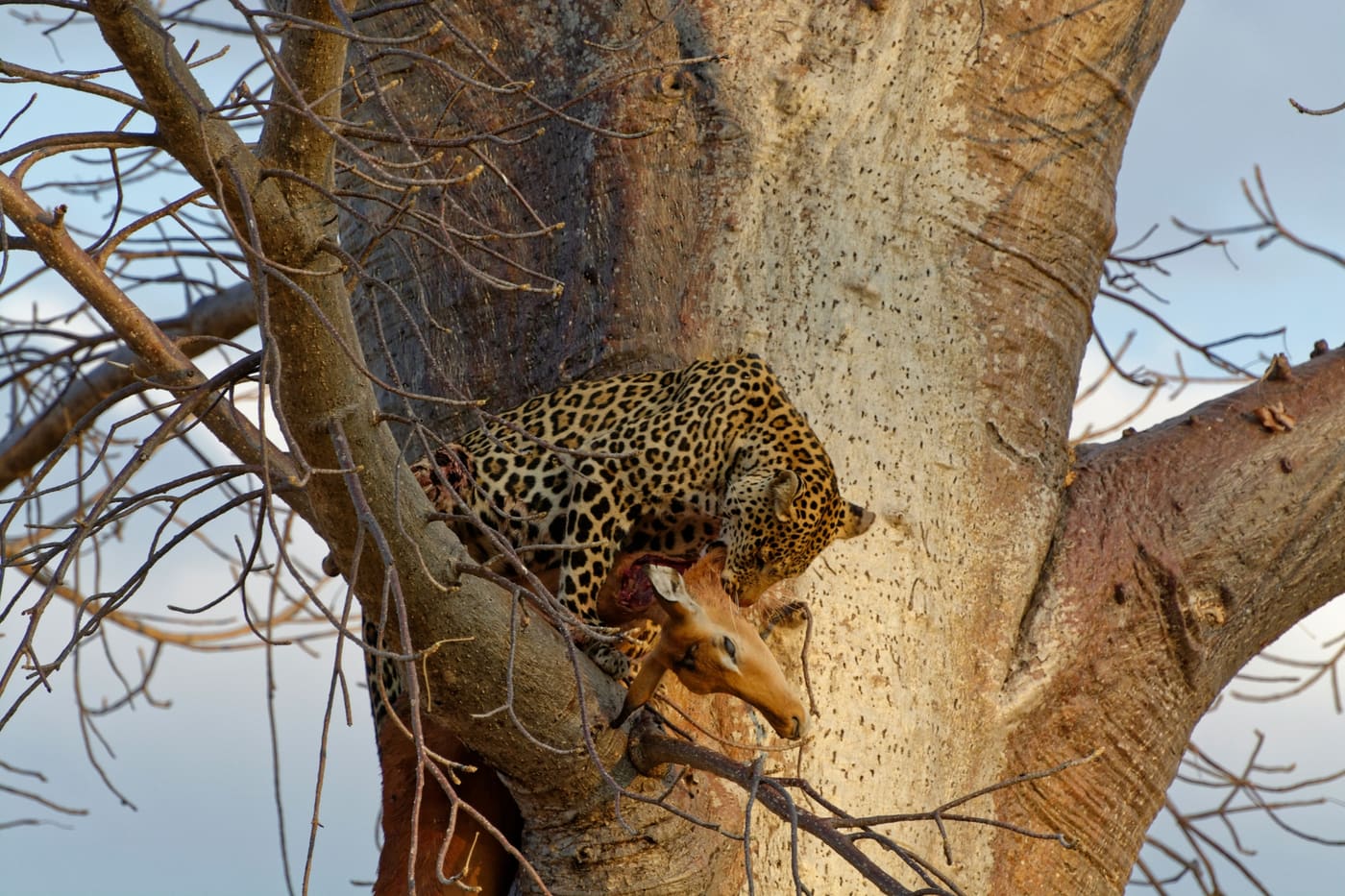
A full, unhurried day in the heart of the Serengeti – the safari at its most elemental. Depart before dawn as the plains emerge from darkness into the extraordinary Serengeti sunrise, seeking the predators that have been active through the night. The Seronera Valley is the richest game-viewing zone in the central Serengeti: resident lion prides, leopards in the fig and sausage trees along the valley river, large cheetah populations on the surrounding open plains, and an outstanding diversity of raptors wheeling overhead. Your guide's knowledge of resident pride territories and individual animal ranges transforms every sighting from chance encounter into informed understanding of the ecosystem's complex social dynamics. A bush picnic lunch at a scenic kopje is followed by an afternoon return to the plains for the golden hour, when the light turns amber and the landscape – wildebeest silhouetted against a scarlet horizon – becomes one of Africa's defining images. Return to Seronera camp for dinner and overnight.
Dawn Predator Drive
Seronera Valley
Leopard Territory
Cheetah Plains
Kopje Picnic Lunch
Golden Hour Drive
D5
Serengeti Morning Drive ? Tarangire National Park
Sunrise game drive – Depart Serengeti ~10:30am – Tarangire afternoon drive
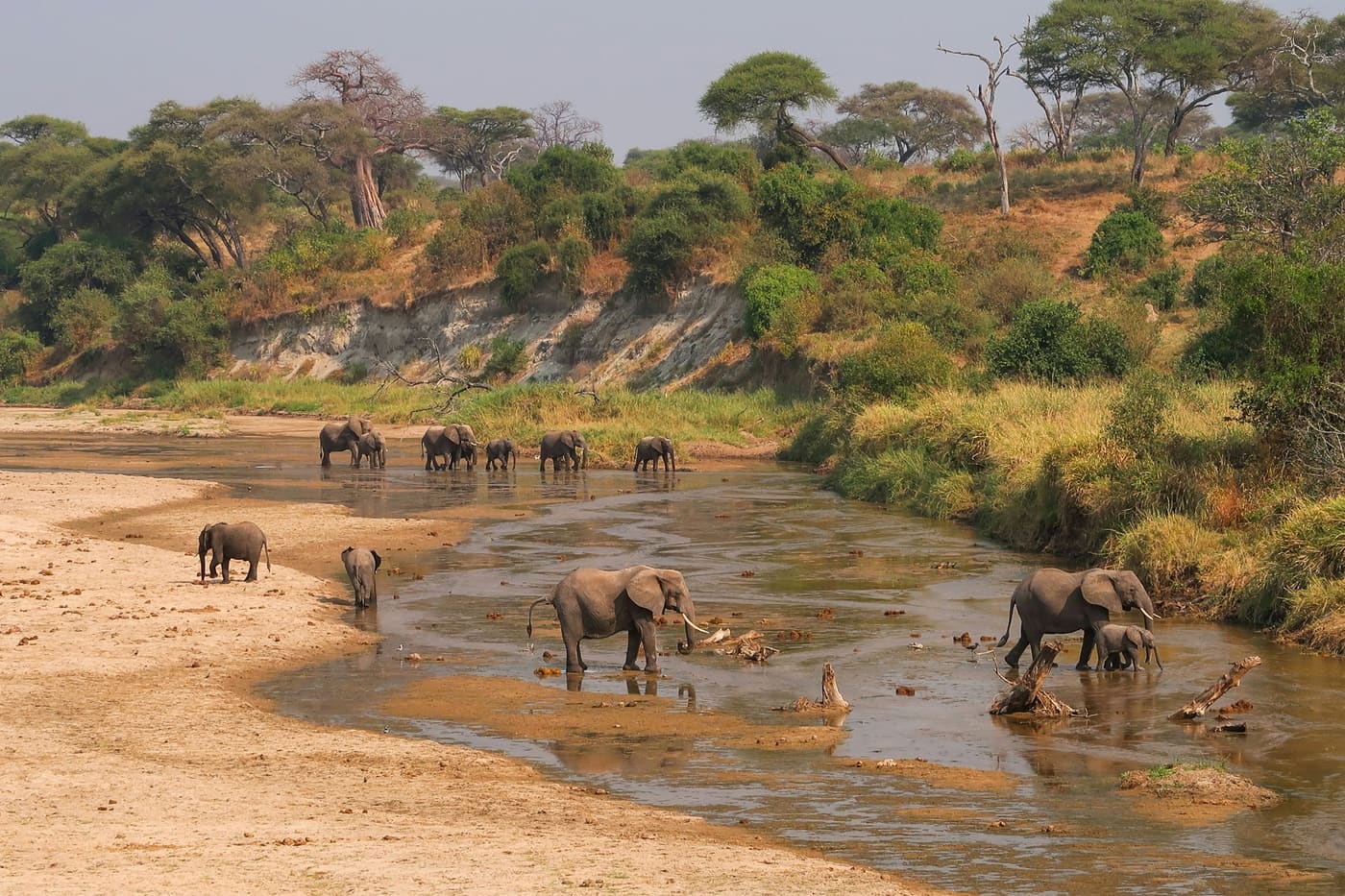
A final sunrise game drive through the Serengeti before departing for Tarangire National Park – a superb contrast that rounds out the full circuit with something genuinely different. The drive from the Serengeti to Tarangire traverses the Ngorongoro Conservation Area and drops back towards Arusha before turning south into a landscape of dry acacia scrub and towering ancient baobabs. Tarangire National Park is one of Tanzania's most underrated wildlife destinations – particularly exceptional during the dry season (June to October) when the Tarangire River becomes the only permanent water source for a vast surrounding area, drawing enormous concentrations of elephants, sometimes several hundred in a single gathering. These are among the largest elephant groups you will encounter anywhere in Africa. Buffalo herds, fringe-eared oryx, large prides of lion, and an outstanding diversity of dry-country birds add to a late afternoon game drive that closes the circuit on a magnificent high note. Overnight at Tarangire camp.
Final Serengeti Drive
Ancient Baobabs
Elephant Concentrations
Tarangire River
Fringe-Eared Oryx
Camp Overnight
D6
Tarangire Morning Drive ? Arusha
Early morning game drive – Depart ~10:30am – Arrive Arusha by early afternoon
The final morning begins with an early game drive through Tarangire – the light at dawn in the baobab landscape is remarkable, and the elephants that congregate overnight at the river are often still present in large numbers as the sun rises. Spend the morning making the most of Tarangire's dry-country wildlife before returning to camp for a packed breakfast and departure. The drive back to Arusha takes approximately two hours and arrives in the early afternoon – leaving plenty of time for an overnight stay before onward travel, or an afternoon connection to Kilimanjaro Airport or Dar es Salaam for a Zanzibar extension. Six days in the field, four of Africa's greatest parks, and memories that will endure for a lifetime. Well done on completing the full northern circuit.
Dawn Baobab Drive
Morning Elephants
Packed Breakfast
Return to Arusha
Travel Information
Getting to Arusha
This tour starts and ends in Arusha. Our team handles all ground logistics from the moment you land at the airport.
1
This tour starts and ends in Arusha, Tanzania. The most convenient airport is Kilimanjaro International Airport (JRO), located approximately 40 km east of Arusha on the road to Moshi. Most international travellers transit through Nairobi (NBO), Dar es Salaam (DAR), or Addis Ababa (ADD).
2
Fly to/from Kilimanjaro Airport (JRO) or Arusha Airport (ARK) via Dar es Salaam or Nairobi. Direct flights from Europe are available on KLM (Amsterdam) and several charter carriers. Check current prices and availability through your preferred booking platform.
3
Airport transfers to and from Arusha can be arranged by Wild Gaze Safaris at an additional cost. Please provide your flight details at least 48 hours in advance. Our drivers meet you in the arrivals hall with a name board.
4
Additional accommodation in Arusha before or after the safari can be arranged at a range of price points – from comfortable guesthouses to boutique lodges. We can also arrange onward connections to Zanzibar or the coast at the end of the tour.
What's Covered
Package Inclusions
All national park entrance and conservation area fees
Ngorongoro Crater descent fee (per vehicle, per entry)
All meals: breakfast, packed lunch, and dinner each day
Drinking water and beverages throughout the tour
Professional driver-guide (English-speaking, expert naturalist)
All camp staff, cooks, and camp crew wages
High-quality tents, sleeping bags, and camping equipment
All activities as listed in the itinerary
4WD safari vehicle with pop-up roof for game viewing
All road transport throughout the safari itinerary
Olduvai Gorge museum entry fee
All government taxes and VAT – no hidden charges